Wednesday, July 27, 2011

My visit to Japan

was facilitated by Mrs. Akiko Imaizumi and Mr. Tetsuo Takehara, International Coordinators at the University of Tokyo to whom I had been introduced by Dr. Ryuji Oshima. Dr. Oshima was previously a visiting researcher from the University of Tokyo at Arizona State University and was kind enough to meet with me many months ago in order to discuss my desire to visit Japan as I began planning my circumnavigation itinerary. Mrs. Imaizumi and Mr. Takehara arranged accommodations at a University of Tokyo lodge for international research students and set up two weeks full of solar energy technology related meetings and Japanese cultural experiences for me. I cannot thank them enough for the time and energy which they put into making my stay in Japan such an exceptional experience.

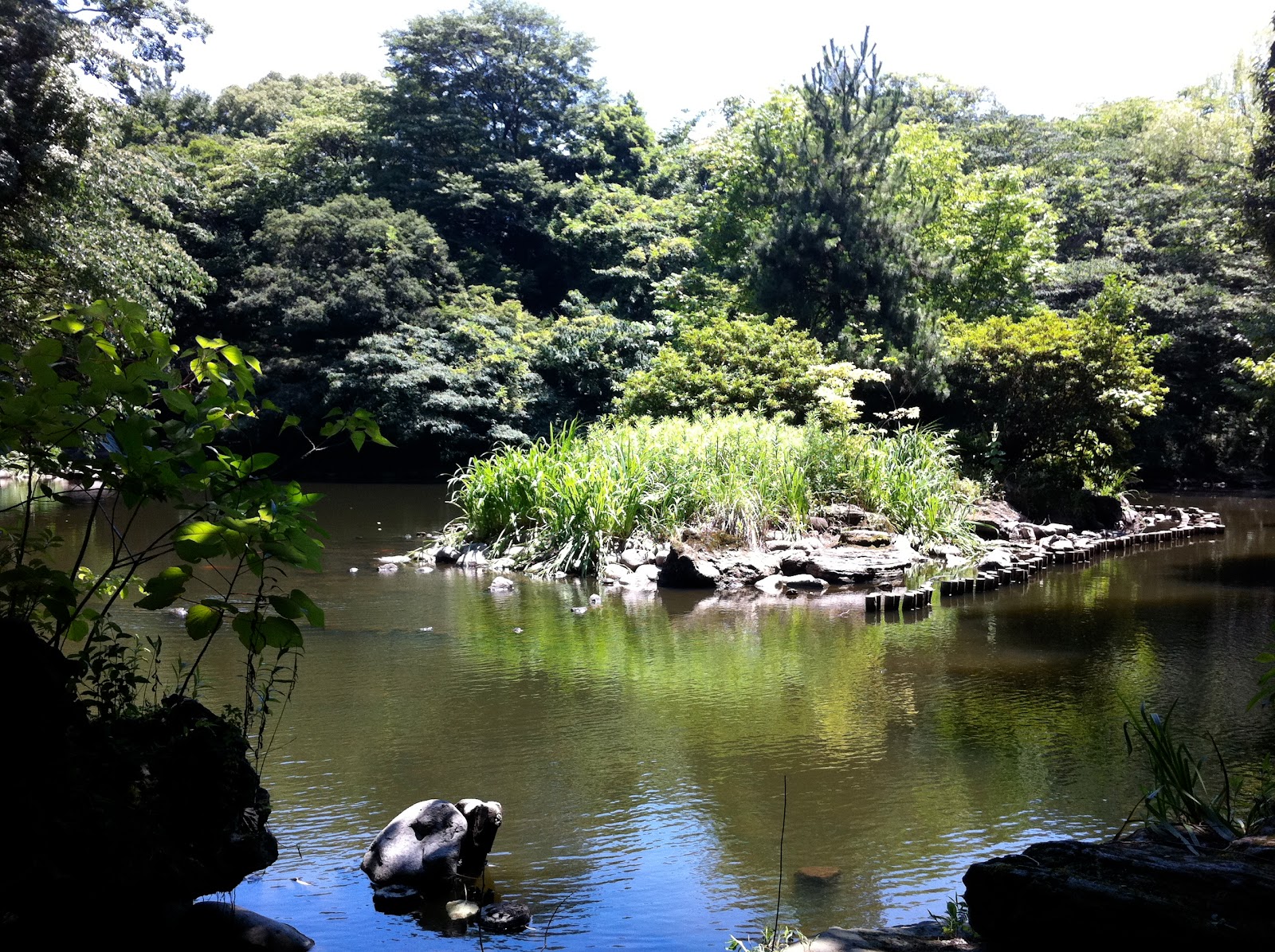
On my first full day in Japan, I explored the Hongo campus of the University of Tokyo and walked about a beautiful koi pond in the center of campus.


After this enjoyable experience, I attended The Global Solar+ Initiative, a day-long seminar in which Japanese solar industry stakeholders addressed the question “Is It Feasible to Build Civilization Based on Solar Power as The Main Source of Energy?”. Such individuals as Mikio Katayama, the President of Sharp Corporation, and Koichi Kawana, President of JGC Corporation gave presentations at the seminar. During the second day of my visit, I met with Professor Yoshiaki Nakano, Director of the University of Tokyo Research Center for Advanced Science and Technology (RCAST) and its Solar Quest initiative, and Professor Yoshitaka Okada, an expert in the area of quantum dots and intermediate band solar cells. Our multi-faceted discussions were very enlightening and proved to be excellent introductions to solar energy technology research in Japan. The third day of my visit found me on the train with Mr. Takehara to Hokuto, a town approximately 90 miles west of Tokyo where a 1 MW demonstration solar power plant project was jointly organized by the Japanese government body The New Energy and Industrial Technology Development Organization (NEDO), the Nippon Telegraph and Telephone Corporation (NTT) and the city of Hokuto. The plant has proved a successful venue for the comparative evaluation of various types of solar energy technology in Japan and as a research environment in which issues pertaining to the grid connection of a large solar power plant could be studied. Tours of the plant are given regularly and a surprising number of people were there to learn more about the use of solar energy technology. It was a very tangible expression of the popular Japanese interest in renewable energy technologies.


The popular Japanese interest in renewable energy technologies was a common theme to many of the discussions that I had in Japan. Having arrived in Japan only four months after the Tohuko earthquake and tsunami of March 11 which ravaged eastern Japan and initiated the still ongoing Fukushima nuclear reactor crises, the “energy question” was on the everyone’s mind. In fact, during my visit, the prime minister of Japan, Naoto Kan, announced that Japan must reduce its reliance upon nuclear power and move towards the greater utilization of renewable energy technologies. Though this idea has almost unanimous public support, many people that I talked to were unsure of how such a plan would play out. Since many of Japan’s nuclear power plants have been temporarily closed in response to the Fukushima disaster and many fossil fuel plants in northern Japan were damaged by the earthquake and tsunami, Japan continues to face serious power shortages. During my stay, I observed Japanese citizens and organizations working together to reduce power consumption in order to not exceed the reduced power production of the nation. Air conditioners were turned off, elevators and escalators were shut down, laboratories were temporarily closed and factory schedules were rearranged in attempts to avoid the rolling blackouts that would result from exceeding the reduced production capacity.


The day after my visit to the Hokuto solar power plant, I met with Professor Makoto Konagai of the Tokyo Institute of Technology to discuss his work in the area of multijunction thin film solar cells and then traveled to the offices of NEDO in order to talk to Mr. Kohsuke Ohba and Mr. Atsuhiko Kiba about the Japanese government’s funding programs for solar energy technology research. Finally, to conclude my first week in Japan, on Friday, I returned to the University of Tokyo to visit the laboratories of Professor Hiroshi Segawa and the JX Nippon Oil and Energy Corporation, and to discuss the research on organic solar cells that is taking place at RCAST with Associate Professor Takaya Kubo. The contrast in the equipment of the organic solar cell laboratories and the crystalline solar cell laboratories was quite shocking. While they both utilized largely the same cell characterization equipment, the cell fabrication equipment was entirely different. While the crystalline solar cell laboratories contained a variety of expensive crystal growth equipment, the organic solar cell labs contained merely a screen printer, glass substrates and a few flasks of chemicals. Having previously had little experience with organic solar cells, Professor Kubo’s introduction to the area was very informative for me.

Over my first weekend in Japan, I enjoyed many unique Japanese cultural experiences. On Friday night, Mr. Takehara took me out to a delicious tempura dinner. The meal consisted of a number of small portions of lightly fried local vegetables and seafood. Each item was prepared in front of us by the chef and then placed at our table setting. A few of the courses which were particularly unique in my experience were the raw octopus and the eel bone.


Following our dinner, we visited a Japanese jazz club, The Pit Inn, to catch a few sets of originals by local players. Mr. Takehara said that he had been there over thirty years ago and thought that it might be a good place to listen to some Japanese players. He was absolutely right. The concert was fantastic and further highlighted for me the fact that jazz has spread around the globe. It is exciting for me to think that great local players can be found in almost every major metropolitan area in the world. On Saturday, I visited the surroundings of the Imperial Palace in downtown Tokyo and spent hours admiring the area’s gardens and waterways.


Sunday, I explored a number of areas in downtown Tokyo, walking about the Shinjuku, Shibuya and Akihabara districts. Everywhere I looked there were densely packed and brightly lit buildings full of all manner of wares and entertainment. I tried my hand at Pachinko, a unique Japanese game combining elements of pinball and slot machines, and found some old videogame favorites in the arcades. Though people seemed to be having a wonderful time in the many karaoke bars, I did not feel particularly inclined to share my vocal stylings with the other citizens of Tokyo. The final day of my weekend in Japan was on Monday since the third Monday of July is the national Japanese holiday, Marine Day. I took this opportunity to visit the Senso-ji Buddhist temple, the oldest temple in Tokyo. Between the gates leading up to the temple, vendors in small stores decorated with flags and lanterns sold every imaginable type of Japanese snack food and souvenir. At the temple, the many visitors were busily engaged in lighting incense, washing their hands in tsukubai (ceremonial washbasins) and learning about their fortunes at wooden omikuji cabinets. At the omikuji cabinets, one would shake a small hexagonal metal cylinder and then draw from it one of many thin sticks which each had a unique character sequence written upon it. The stick-drawer would then open the drawer of the cabinet upon which the corresponding character sequence was written to receive a piece of paper detailing their fortune. I found it somewhat ironic that when I attempted this, my fortune advised me that I currently had very bad luck and that I should cancel any trips that I had been planning. Needless to say, I did not take this advice.


My second week in Japan consisted of visits to a number of cities outside of Tokyo. On Tuesday, I took the train to Tsukuba, a city northeast of Tokyo which is home to the University of Tsukuba and the National Institute for Advanced Industrial Science and Technology (AIST). In Tsukuba, I met up with Dr. Oshima. Dr. Oshima showed me around the University of Tsukuba (where he had worked upon his undergraduate and graduate degrees) and then took me to visit his new place of employment, AIST. At AIST, Dr. Koji Matsubara, gave me a thorough presentation on the many areas of solar energy technology currently being researched there and I toured the photovoltaic research laboratory facilities before engaging in an educational discussion with Dr. Oshima and his colleague Dr. Takeyoshi Sugaya on their current work in the area of quantum dots and intermediate band materials and solar cells. On Wednesday, I took the Shinkansen (commonly known as "the bullet train") to Nagoya in order to visit Professor Masafumi Yamaguchi and his solar energy technology research laboratory at the Toyota Technological Institute. Following my informative visit with Professor Yamaguchi, I continued on by train to Kyoto. On Thursday, I traveled from Kyoto to Nara in order to visit one of Professor Yamaguchi’s former doctoral students, Dr. Tatsuya Takamoto, who is currently working on multijunction solar cells and concentrated photovoltaics at Sharp. Dr. Takamoto gave me a presentation regarding Sharps solar energy technology business activities and had a number of interesting things to say regarding the relationship between academic and industrial work in the area of solar energy technology in Japan, and regarding the international solar energy technology marketplace. Following my morning visit with Dr. Takamoto, I took the afternoon to visit some of the historic temples in Nara, an ancient Japanese city that was the capital of the country between 710 and 784 AD. Historically, the deer surrounding the temples of Nara were considered sacred and today, they are a protected species which roam free and tame around the town. Herds of deer could be found grazing on the grass in front of office buildings, walking across the streets when the crosswalk sign turned green, and approaching temple visitors for a snack or a pat on the head.


On Friday, I walked around Kyoto, taking in the sights and sounds of more ancient temples before returning to Tokyo to pack my things and ready myself for my departure to New Zealand on Saturday.

Wednesday, July 13, 2011

Visiting Bangladesh

was an experience unlike any that I have previously had. 

In Dhaka, I stayed with Jeremy Wendte and two other American Fulbright Fellows, Sloan Kulper and Holly Battelle. Jeremy was a fellow student research assistant at the Arizona State University Solar Power Laboratory until he graduated last December and left the United States to begin his study of solar energy technology usage in Bangladesh. Without the help of these knowledgeable three, I would have been lost in the dirty, wet and overcrowded cityscape in which I found myself. 

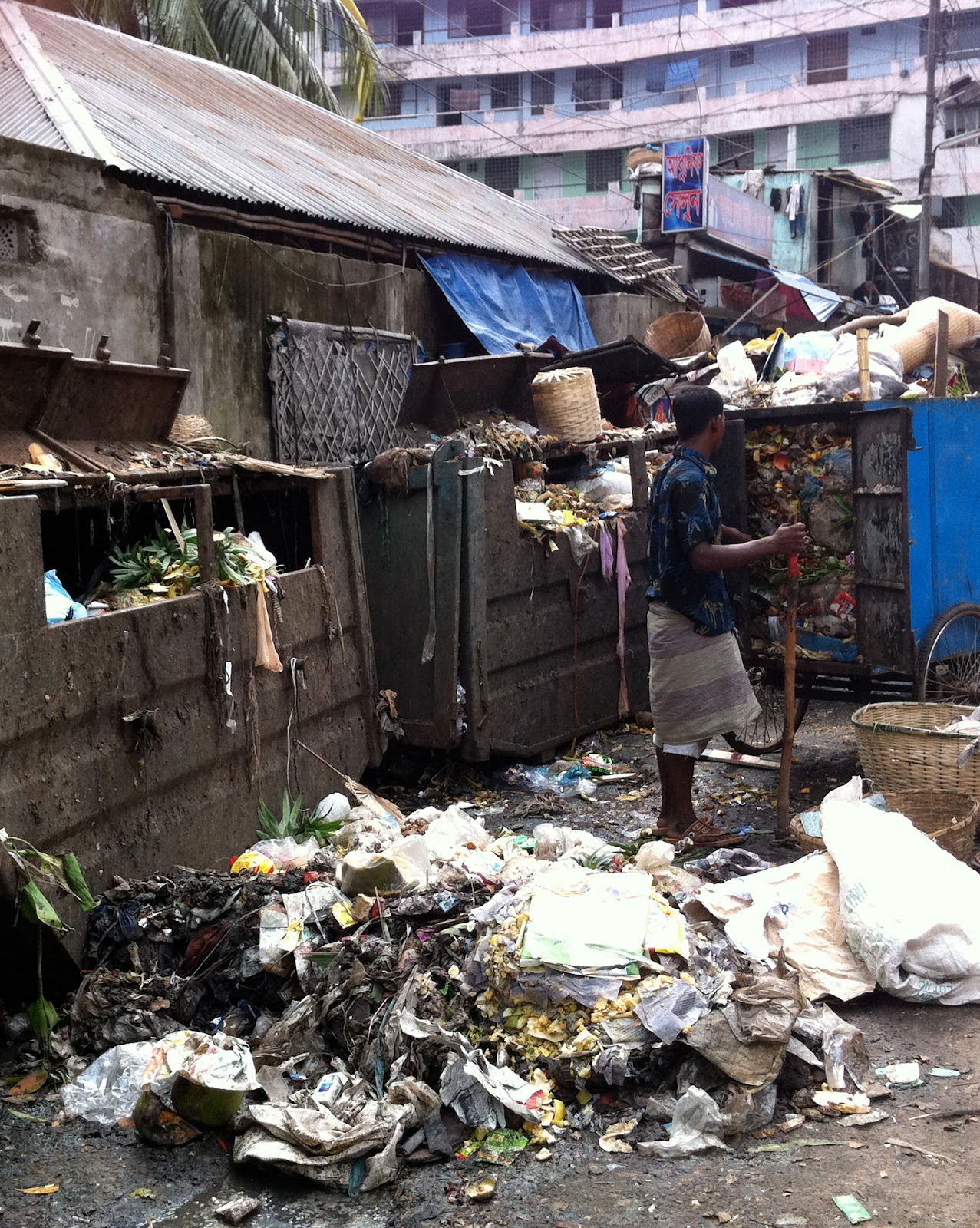
Never had I been so grateful for the basic infrastructure which I enjoy in the United States as I was during my stay in Bangladesh. Trash piles lay in smelly heaps on the side of the street. Poorly managed, continually honking traffic congested roads at all hours of the day and night. Electrical and telecommunications wiring was strung up haphazardly in a tangled and indecipherable mess. Power to entire neighborhoods of the city was shut off for hours at a time in order to compensate for insufficient production.


And more shocking than all of these somewhat superficial urban unpleasantries was the fact that 100 million Bangladeshi citizens do not even have inconsistent power to complain about. They have no electrical grid connection at all. 

This unfortunate situation has created a very large market need which a number of organizations are attempting to meet. Grameen Shakti and BRAC are two non-profit organizations which offer a variety of micro-financed energy products to this market. Grameen Shakti's product line includes solar power systems, biogas plants and improved cooking stoves. Visiting Grameen Shakti's corporate headquarters in Dhaka and their regional and branch offices the Phulpur region gave me a unique opportunity to learn about the operation of their organization and see how they are meeting the needs of the Bangladeshi people through solar power.

In the Phulpur region, Holly and I visited a rural market in which a number of Grameen Shakti's solar power systems have been installed. Store owners were excited to speak to us about their systems. Among the many benefits which they enjoyed were extended hours of business at night, improved quality of lighting in comparison to the burning of kerosene, increased income from the renting out of one or more of their lights to fellow shopkeepers and reduced operating costs (after full payment for the system) due to the elimination of their need to purchase kerosene.

A number of solar panels can be seen atop the shops in the market below.


Word of the solar power system's benefits appeared to be moving quickly through town and we were fortunate enough to observe the installation of a new system for a small dry goods store.


Our visit seemed to be the talk of the town. People gathered around to listen to our conversations with store owners as we sat sipping the tea which they had so kindly given us. Before we left, everyone gathered in front of the town tailor's shop for a group photo.


Following our visit to the market, Holly and I visited a number of residences which had Grameen Shakti systems installed. We observed the full spectrum of the Grameen Shakti product line including improved cooking stoves which greatly reduce biomass fuel consumption and indoor air pollution


and biogas plants which create methane which can be used for cooking and heating.


Everywhere we visited, owners were enthusiastic about the benefits of the systems, proudly showing off their new lights, small fans, cell phone chargers and televisions.


One of Grameen Shakti's unique organizational features is the Grameen Technology Center. Throughout Bangladesh, 44 Grameen Technology Centers train and employ women in the construction and repair of the lamp shade and charge controller circuits which are part of the Grameen solar power systems. Holly and I visited the Phulpur region Technology Center and spoke to a few of the women who worked there. Although they found the work repetitive, they expressed great satisfaction that they could work from home and that they could make substantial contributions to their families' incomes due to the work opportunity which Grameen Shakti provided them.


Even in grid connected areas in Bangladesh, the market for solar energy technology is substantial. A growing number of people view distributed solar power generation as a viable solution to cities' power shortages. New legislation encourages the installation of solar panels onto newly constructed buildings and photovoltaic integration was a substantial topic of discussion at the first meeting of the Bangladesh Green Building Council which Jeremy, Holly, Sloan and I attended.

In a fortuitous turn of events, a 1 kW solar power plant was installed on the top of the apartment building in which I was staying only a few days before I left Dhaka, Bangladesh for Tokyo, Japan.

I thought it would be the perfect place for a picture.


Inspired by the unfamiliar surroundings, I stayed up one night to compose this song:

Bengali Bangup by Steve Limpert

Sunday, June 26, 2011

In Mumbai,

I stayed at a guesthouse on the Indian Institute of Technology (IIT) campus by Powai Lake. Since my flight landed at 3:20am, the management was asleep when I arrived at the guesthouse and so I decided to wander around campus for a few hours. Since the campus lies in a heavily forested area, the wildlife on campus is quite diverse. Over the couse of my time at IIT, I saw crabs, monkeys, cattle, dogs, lizards, swans and all manner of other types of birds. Here's a short video I took at sunrise on Lake Powai on the morning of my arrival and a few pictures of some of the creatures that I saw during my stay at IIT.


My visit to IIT Bombay was prompted by my desire to talk with Professor Chetan Solanki about his work in the area of silicon solar cells and about the many projects going on at IIT in the broader area of solar energy technology. As part of the Indian National Solar Mission, the National Center for Photovoltaic Research and Education has been established at IIT Bombay for the purpose of assisting in achieving the national goal of 20 GW of installed solar energy systems by 2020. Towards this end, research across the full spectrum of solar energy technology is being pursued at the center. Additionally, courses are offered to current university students as well as to professionals of all levels of expertise and certification programs for technical workers are being developed. As part of this large research endeavor, the IIT Bombay Department of Energy Science and Engineering is collaborating with government and industry partners to build at 1 MW solar thermal power plant in Delhi which will serve as a technology evaluation and testing ground.

On the first of my sight-seeing days in Mumbai, I visited Sanjay Gandhi National Park. The park is located north of downtown Mumbai and lies between the eastern and the western city suburbs. With an area of 104 square kilometers, it holds the world record for the largest park within a city boundary. In the park, I took a seven kilometer motorbike ride into the forest in order to see the Kanheri Caves. The Kanheri Caves are Buddhist dwellings and religious spaces which were carved into basaltic mountain rock between the 1st century BCE and the 10th century CE. The caves feature carvings of Buddha and other religious figures, ancient inscriptions and stupas, mound-like structures which often contain Buddhist relics. Below are a few photos and a video that I took while exploring some of the 109 caves.


After exploring the caves, I visited the park's information center. The center contains a number of displays about local flora and fauna, as well as about climate change and the importance of the conservation of resources and wildlife habitat. A short hike from the information center is a memorial to Mahatma Gandhi which features a central pavilion and surrounding gardens as can be seen below.


The following day, I took a tour of Mumbai in order to explore the jungle of the innercity. During my tour, I visited a temple of the International Society for Krishna Consciousness, a beach upon which a large ship had been forced to make an emergency landing, a public laundry, the Hanging Gardens of Mumbai which feature a variety of animal-shaped carved hedges, Gandhi's residence, Victoria Station and the Gate of India. Below are some pictures from my urban adventures.


After the completion of my time in Mumbai, I flew to Ahmedabad, a city in the northern state of Gujarat, in order to visit Dr. Omkar Jani at Pandit Deendayal Petroleum University (PDPU) and the Gujarat Energy Research and Management Institute (GERMI). While both institutions were established through the Gujarat State Petroleum Corporation, their work does not focus exclusively on oil and natural gas. In fact, GERMI has an entire solar research wing which works in solar energy policy, technology and education. Seeing as Gujarat is the most progressive Indian state in its pursuit of renewable energy usage and established substantial state solar energy goals and subsidy programs before the national government did, GERMI is in prime position to have a very significant impact. Currently, GERMI is partaking in a number of exciting projects including a 1 MW photovoltaic test facility on the campus of PDPU and a city-wide rooftop installation program.

Staying in the university dormitories at PDPU, I had the opportunity to meet some of the students who had remained on campus for the summer in order to do internships with the Gujarat State Petroleum Corporation. It was fascinating to chat with my new friends, Larsika and Swastika, about their work and about the differences between American and Indian culture while exploring the areas surrounding campus.

Following the conclusion of my visit to Ahmedabad, I flew back to Mumbai and prepared to depart for Dhaka, Bangladesh.

Wednesday, June 15, 2011

Following my time in Munich at Intersolar Europe,

I took the train back to Berlin and prepared to depart for Doha, Qatar.

I knew that with this next flight, I would be departing from familiar territory. While western Europe is most assuredly very different than the United States, I anticipated that it would be much more similar to what I was familiar with than Qatar, India and Bangladesh would be. 

My instincts did not prove me wrong. My time in Doha, Qatar was a fascinatingly foreign experience. Stepping off the plane and into customs, I was surrounded by people dressed very differently than me. While in the United States, I blend into the crowd with my t-shit and jeans, here I stood out like a sore thumb amongst the many men in thawbs and women in burqas. After passing through customs, I walked outside to see if I would be able to find a taxi to take me to the hostel I had booked for myself. It was almost midnight and I was ready to have a place to sleep.

After waiting for twenty minutes in the lengthy line of people queued for taxis, it was finally my turn to get into a cab. The cab pulled up. I placed my trumpet and my backpack in the trunk and slid into the passenger seat. "I would like to go to the Doha Youth Hostel at 17 Al Rayhan Street," I said. The cab driver responded with a quizzical look and broken English that was difficult for me to understand. Hmmm, no GPS, I noticed as I looked around the dashboard of the car. Perhaps the map with the hostel location marked that I've saved for just such an occasion will be of use, I thought. I pulled out my phone and displayed the map with the location that I desired to go to clearly marked. The cab driver appeared puzzled. After a few more attempts to communicate my desired destination, I stepped out of the cab. The cab driver had indicated that he was interested in taking a different customer, someone who was looking to travel to a destination with which he was more familiar. Perhaps another taxi driver would have a better knowledge of where I wanted to go, he said.

Ok. Sure, I thought. Maybe someone else will have a better knowledge of where I want to go.

Unfortunately, that was not the case.

This scene repeated itself two more times before the airport official in charge of directing people at the front of the taxi line to their car became tired of having to refill my cab and redirect me to another vehicle. Stepping in to assist, he assured my third driver that the Doha Youth Hostel was behind the American Embassy, a landmark with which my driver seemed familiar. Excellent, I thought. 

We were off.

That's funny, I noted, looking at the map on my phone as we drove away from the airport. It doesn't have the American Embassy marked on here. A strange omission. Perhaps security concerns...

Sure enough, upon our arrival to the neighborhood behind the American Embassy, there was no youth hostel. 

After making a few phone calls and stopping to ask the locals for advice, my driver continued on. Apparently, two years ago, the hostel changed locations, he explained to me. 

What? Two years ago!?! Had nobody gone there from the airport since then?

Another ten minutes of driving down dusty, poorly lit streets and we arrived in front the new location of The Doha Youth Hostel where the seven foot tall entry gates had been securely locked for the night. Having brought me this far, my driver was not deterred. He incessantly rang the door bell until the manager of the hostel was raised from bed and came to open the gate.

I had finally arrived! They had a room for me and I could finally sleep! I thanked my driver profusely and went immediately to bed.

Checking back in the morning, my faith in myself and in technology was affirmed. The hostel was exactly where I had stated it would be and where Google Maps had shown it to be: 17 Al Rayhan Street.

The Doha Youth Hostel and Al Rayhan Street:


That same morning, after another troubling transportation experience in which I waited approximately two hours for a bus which never arrived, I hailed a cab to try my luck again in an attempt to get to the Museum of Islamic Art at the Doha port. This time, I found much more success and after a pleasant drive through the city during which my driver pointed out a number of interesting local landmarks, I arrived at my destination.

The museum was beautiful. It was designed by famed architect I. M. Pei and was stunning to behold. The collections which it housed where equally amazing and I very much enjoyed my chance to learn more about Islamic arts and culture by visiting there.

Below are a few pictures and videos highlighting the museum and its collection:

The entranceway of the Museum of Islamic Art

An exterior panorama of the Museum of Islamic Art and its surroundings

The interior of the Museum of Islamic Art

A solid gold falcon encrusted in rubies, emeralds, diamonds and sapphires

(I want one.)

The following day, I visited Mike Farshchi at the Chevron Center for Sustainable Energy Efficiency (CSEE) at the Qatar Science and Technology Park. The goal of the Chevron CSEE is to educate the decision makers of Qatar about energy efficient building practices and to evaluate the performance solar energy systems in the gulf climate. Currently at the offices of the Chevron CSEE is an engaging interactive display explaining different lighting options and building temperature control schemes. The main purpose of the display is to communicate that by making energy efficient choices in the construction of buildings and public structures, the nation of Qatar will need to produce significantly less electricity and thus will have a greater amount of natural gas to export. Currently in the early stages of construction outside of the Chevron CSEE offices is the test ground for solar energy systems. Mr. Farshchi anticipated that by mid-2012 the test ground would be up and running, and a number of installed photovoltaic systems would be being actively evaluated for performance in the local hot, humid,  windy and dusty climate.

After three nights in Doha, it was time for me to leave Qatar for Mumbai, India. I packed my things, checked out of the hostel and marveled at the fact that during the four days that I had been at the hostel, I had not seen a single other traveler.

Had I been the only person staying there?

Monday, June 13, 2011

In Berlin,

I met up with Gustav by the Brandenburg Gate, a prominent Berlin landmark built in the late 18th century which was the site of Ronald Reagan's famed Cold War speech in which he demanded "Mr. Gorbachev, tear down this wall!"


Following our introduction, Gustav proceeded to give a fact-filled tour of the surrounding area's major landmarks as we walked by the Reichstag building (home of the German parliament) and the Bundeskanzleramt (home of the German chancellery), 


across the line where the Berlin wall had once stood and down Unter den Linden, a street where many building from the Prussian period still stand. Neue Wache, that is "New Guard House", a Prussian guardhouse from 1816, which is now the "Central Memorial of the Federal Republic of Germany for the Victims of War and Tyranny", was a particularly moving site.

Following a traditional Bavarian lunch of weisswurt, ein brezel und weissbier, and a visit to the Akademie der Kunste, the official arts council to the German government (of which Gustav is one of five hundred members chosen from throughout the German arts world), we retired to Gustav's apartment to chat about his work as a newspaper editor, journalist and author of historical books.

The following day, thanks to the much-appreciated assistance of Mr. Tymen DeJohn, First Solar's vice president of global manufacturing, I visited the offices of First Solar in Berlin and their manufacturing plant in Frankfurt an der Oder, a city east of Berlin, near the German-Polish border. First Solar is a global leader in the manufacturing of thin film photovoltaics and it was a fantastic learning experience to visit them. In Berlin, I received a presentation from Max Junghanns which gave a broad overview of the company, and in Frankfurt, I received a tour from Mr. Burghard von Westerholt of the manufacturing facilities where 9,000 photovoltaics panels are made each day on lines that operate 24 hours a day, 365 days a year. The scale, precision and rapid growth of their operation was truly stunning.

At both the Fraunhofer Institute for Solar Energy Systems (ISE) in Freiburg and the offices of First Solar in Berlin, I had been informed that it might interest me to adjust my travel plans in Germany in order to attend Intersolar Europe, the largest solar energy industry exposition in the world, in Munich from June 6 to June 10. I gladly accepted this advice and purchased a train ticket for myself in order to travel to Munich. While conference tickets were of the order of 1000, the Fraunhofer Institute, as an organizing partner, was kind enough to help me get into the conference free of cost.

At the conference, I attended a number of informative talks given by industry representatives, market analysts, national politicians and academics. The presentations which I attended were on a wide variety of topics including "India's PV Market Development", "Balance of Systems" (an analysis of the power electronic devices used in connecting photovoltaic power plants to the grid), "Concentrating PV" and "PV Energy World" (a presentation by representatives of Fraunhofer ISE and Siemens on the progress made by and the future prospects of renewable energy technologies). In addition to conference talks, I attended the industry exposition and strolled through hall after hall of industry exhibitors, marveling at the number of players in the market and listening to sales pitch after sales pitch.

A few pictures from my time at Intersolar Europe:

A sign outside the convention center entrance commemorating the 20th year of Intersolar Europe.

Quick Fact:
In 1991, five companies presented their products at the one day exhibition. 
In 2011, approximately 2,200 exhibitors presented their products and 75,000 visitors attended the week-long event.

The information desks and ticket booths at the entrance to the industry exposition on its opening day.

Exposition Scale Assistance:
There were 16 halls of this size filled with companies presenting their products.

Mr. Stryi-Hipp of the Fraunhofer ISE presenting at The PV Energy World Booth

Sunday, June 12, 2011

On June 1,

I arrived in Moselkern, a tiny village on the edge of the Mosel river. The purpose of my visit to this quaint setting was to visit Burg Eltz, a 12th century castle about an hour's hike through the woods surrounding the town. And so, once again I wandered through a beautiful German forest in search of a castle taking photos along the way.


Success!

Having achieved what I had set out to do in Moselkern, it was time to move on. 

My next destination was Bad Neustadt, a city near the northern border of the German state of Bavaria. In coming to this area, it was my intention to visit the lands of my ancestors.

My grandmother, Sarah Limpert, has done extensive research into my family's history and one of her greatest findings is a ship's log documenting the immigration of Bernhard Limpert and his wife, Dorothea Schublein, to the United States in the mid-19th century from Nickersfelden and Brendlorenzen, Germany, respectively. On today's map, one will find that the once independent village of Brendlorenzen has become a district within the larger city of Bad Neustadt, but that the village of Nickersfelden remains very much as it may have been over a hundred years ago, a small rural farming village of only a few hundred inhabitants. 

Renting a bike, I set out from Bad Neustadt towards Nickersfelden and the other surrounding villages in search of churches and graveyards were hints of my family history might be hiding. Upon my arrival in Nickersfelden, I recorded a short video while walking into town and had a picture taken of me at the city sign.


While my search of churches and graveyards did not turn up any 19th century familial connections, I did find this:


a small church and graveyard high atop a wooded foothill honoring local soldiers who lost their lives during the battles of World War II. Walking through the rows of grave markers, I found out that, while my grandparents had made it through the war unscathed, perhaps not everyone in my larger family circle had been so lucky.


From Bad Neustadt, I set off for Berlin, where I was to visit both my father's old friend, Gustav Seibt, a leading German historian, journalist and literary critic, and the offices of First Solar, a world leader in thin film photovoltaics manufacturing.

Monday, June 6, 2011

My first day in Freiburg, Germany,

I decided to take a walk through the Black Forest. I had been told that deep in the woods, there was an observation tower from which one could look down upon the entire city. I set off in search of the tower and as I walked, I recorded these images.


Success! I found the tower!

Now, to climb the tower:


And record the view from the top:


With that video taken, I climbed down the tower and wended my way through the woods back toward civilization as the sun set and the forest dimmed.

Having spent my first day in Freiburg exploring nature, I wanted to spend my second day exploring the city. I was particularly interested in visiting the Vauban Quartier, a portion of the city home to an innovative sustainability focused community. The most notable buildings in the quarter are the fifty-nine PlusEnergy homes designed by the German architect Rolf Disch. These homes have a positive net energy balance due to their low energy consumption and solar energy utilization. In fact, not only are these houses ecologically beneficial, but they are economically beneficial. The homes' owners are paid by the utility company for every kWh of electricity that is produced by their solar panels and put onto the electricity grid for use by others.


The day following my exploration of the Vauban Quartier, I walked across the city to visit the Fraunhofer Institute for Solar Energy Systems. I began my visit by meeting with Mr. Gerhard Stryi-Hipp, the director of energy policy. Mr. Stryi-Hipp gave me a presentation regarding the institute’s structure and its many areas of endeavor, and then discussed Germany’s solar energy technology subsidy programs. Following this, I received a tour of the institute’s solar thermal system test facilities from Mr. Stefan Fortuin.

Everyone at the institute was quite excited at the news of the previous day: Germany would be phasing out the use of nuclear power and shutting down all of its nuclear power plants by 2022. At lunch, this was the talk of the table. Mr. Stryi-Hipp, Mr. Fortuin, Mr. Gerhard Willeke, Coordinator of PV, and Mr. Stephan Schindele, a master’s student working on a comparison of the energy policies of California and Germany, all commented on how they could not believe that it had actually happened. In a shocking move, the conservative government had altered its stance on the issue and made its decision on the matter in the wake of the Fukushima disaster.

Finally, all of these posters that I had seen throughout the city could be taken down.


The decision to shut down Germany’s nuclear power plants was yet another in a series of policy decisions which have made and will continue to make Germany a world leader in the use of renewable energy in general and in solar energy specifically. Everyone at the institute was, understandably, very pleased about this.

Following lunch, Mr. Schindele gave me a presentation regarding his masters thesis, "Photovoltaic dissemination regulations in California and Germany: Why the German PV market developed remarkably faster than the one in California". It was a fascinating analysis of the effects of different incentive programs on the development of renewable energy technology markets. According to Mr. Schindele, renewable energy portfolio standards, as implemented in most US states, will tend to grow the market for the cheapest renewable energy sources and will have little effect on the market for more expensive renewable energy sources. In contrast, feed-in tariffs, as implemented in Germany, if structured properly, can be used to grow the markets for renewable energy resources across the full cost spectrum. One of the results of the US renewable energy portfolio standards has been a tremendous growth in the wind energy market. However, the US has experienced very little growth in the photovoltaic market. As a result of its feed-in tariffs, Germany has successfully become a global leader in the development and use of solar energy technology and has brought down its cost significantly in the process, while simultaneously making great strides in the use of wind power.

My final meeting of the day was with Dr. Eicke Weber, the director of the Fraunhofer Institute for Solar Energy Systems. Dr. Weber emphasized the urgency of the work being done on renewable energy technologies at Fraunhofer ISE and around the world. According to Dr. Weber, the development and application of these technologies is key to humanity's continued success on this planet. As our conversation came to a close, Dr. Weber expressed his hope that the US would begin to play a greater leadership role in the use of renewable energy technologies and in dealing with the real global problems of the 21st century.

Dr. Eicke Weber, Myself and Mr. Gerhard Stryi-Hipp

After a brief tour of a laboratory investigating systems for intelligent automated management of residential electrical generation and load supply, my visit to the Fraunhofer Institute for Solar Energy Systems came to a close and I returned to the hostel to pack for my departure from Freiburg the next day.